
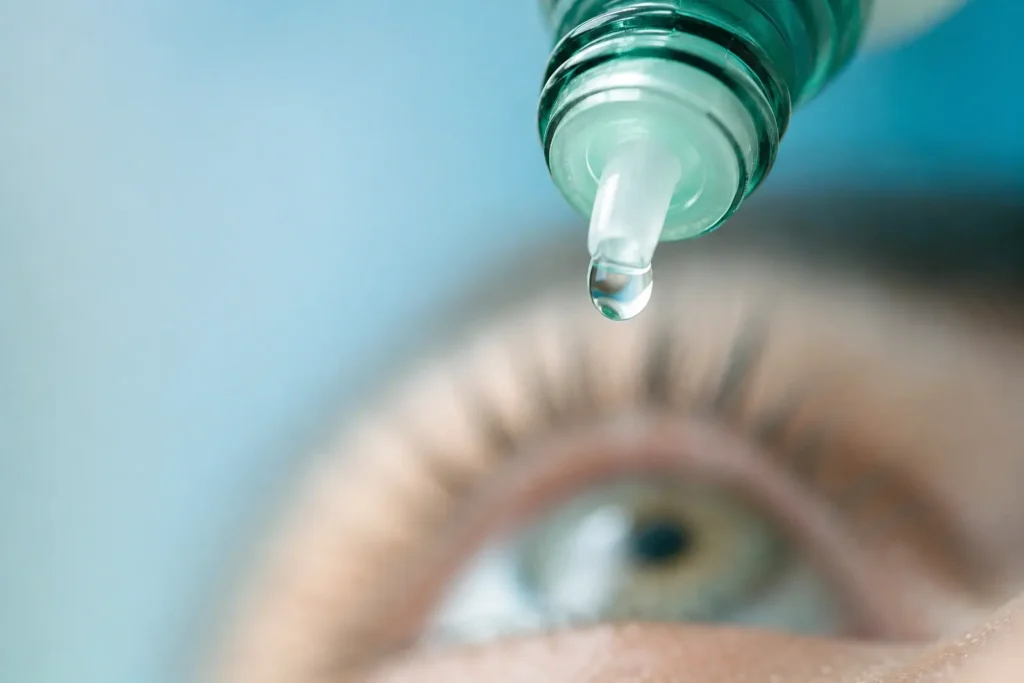
What Is Dry Eye Disease?
Dry eye disease occurs when the eyes don’t produce enough tears, or the tears produced evaporate too quickly or are of poor quality. This disrupts the thin tear film that keeps the eye’s surface comfortable and clear, leading to irritation and, in more persistent cases, inflammation of the ocular surface.
It’s an extremely common condition that becomes more frequent with age, screen use, certain medications, contact lens wear and environmental factors such as air conditioning or wind.
You may have dry eye disease if you notice:
- Gritty, burning or stinging discomfort
- Redness or irritation
- Watery eyes despite feeling dry
- Blurred vision that improves with blinking
- Discomfort with screens or contact lenses
At A Glance
- In-clinic assessment
- Non-surgical treatment
- Ongoing, long-term management
- Self-pay and insured patients
Other Conditions
- Cloudy Vision
- Glaucoma
- Cataract
- Eyelid Lump
Struggling With Sore Or Gritty Eyes?
Book an assessment with Mr Miles Parnell to identify the cause and find lasting relief.
How Dry Eye Is Diagnosed
Assessment includes a slit lamp examination of the eye’s surface, evaluation of tear quantity and quality, and inspection of the eyelid margins and meibomian glands, the glands responsible for keeping tears from evaporating too quickly.
This identifies whether your dry eye is due to insufficient tear production, poor tear quality, or a combination of both, so treatment can be targeted to the specific cause rather than a generic approach.
What To Expect From Treatment
Treatment is tailored to your specific type of dry eye and may include lubricating drops, eyelid hygiene and meibomian gland treatment, anti-inflammatory therapy, or punctal plugs to reduce tear drainage. Most patients see meaningful improvement within a few weeks of starting the right plan.
Risks & Safety
Dry eye treatments are generally very low risk. Where a minor in-clinic procedure such as punctal plug insertion is recommended, Mr Parnell will explain what’s involved and any risks specific to that treatment.
Recovery
There’s no surgical recovery involved in most dry eye treatment. Improvement is usually gradual over several weeks, and your treatment plan may be adjusted at review depending on how your symptoms respond.
When To Seek Help
Book an assessment if symptoms persist for more than a few weeks despite lubricating drops, or if they’re affecting your daily activities, since ongoing untreated inflammation can affect the health of the eye’s surface over time.
At A Glance
Other Conditions
Concerned About Cataracts?
Book an assessment with Mr Miles Parnell to find out whether surgery is right for you.
Common Dry Eye Symptoms
Gritty Sensation
A persistent scratchy or sandy feeling in the eyes.
Redness
Visible irritation, especially by the end of the day.
Watering
Excess tearing as a reflex response to dryness.
Fluctuating Vision
Blurring that clears with blinking.
Light Sensitivity
Discomfort in bright light or sunshine.
Contact Lens Discomfort
Reduced tolerance for lenses worn comfortably before.
Your Dry Eye Assessment Journey
A clear pathway from first assessment through to lasting relief.
Initial Assessment
Slit lamp and tear film examination to characterise your dry eye.
Cause Identification
Assessment of the eyelids and meibomian glands to find the underlying type.
Tailored Treatment
A treatment plan matched to your specific dry eye type.
Review & Adjustment
Follow-up to track improvement and fine-tune your plan.
Types Of Dry Eye Treatment
Lubricating Drops
Tailored to your specific tear-film deficiency.
Eyelid & Gland Treatment
For evaporative dry eye, the most common form.
Anti-Inflammatory Therapy
Where surface inflammation is contributing to symptoms.